
 EN
EN
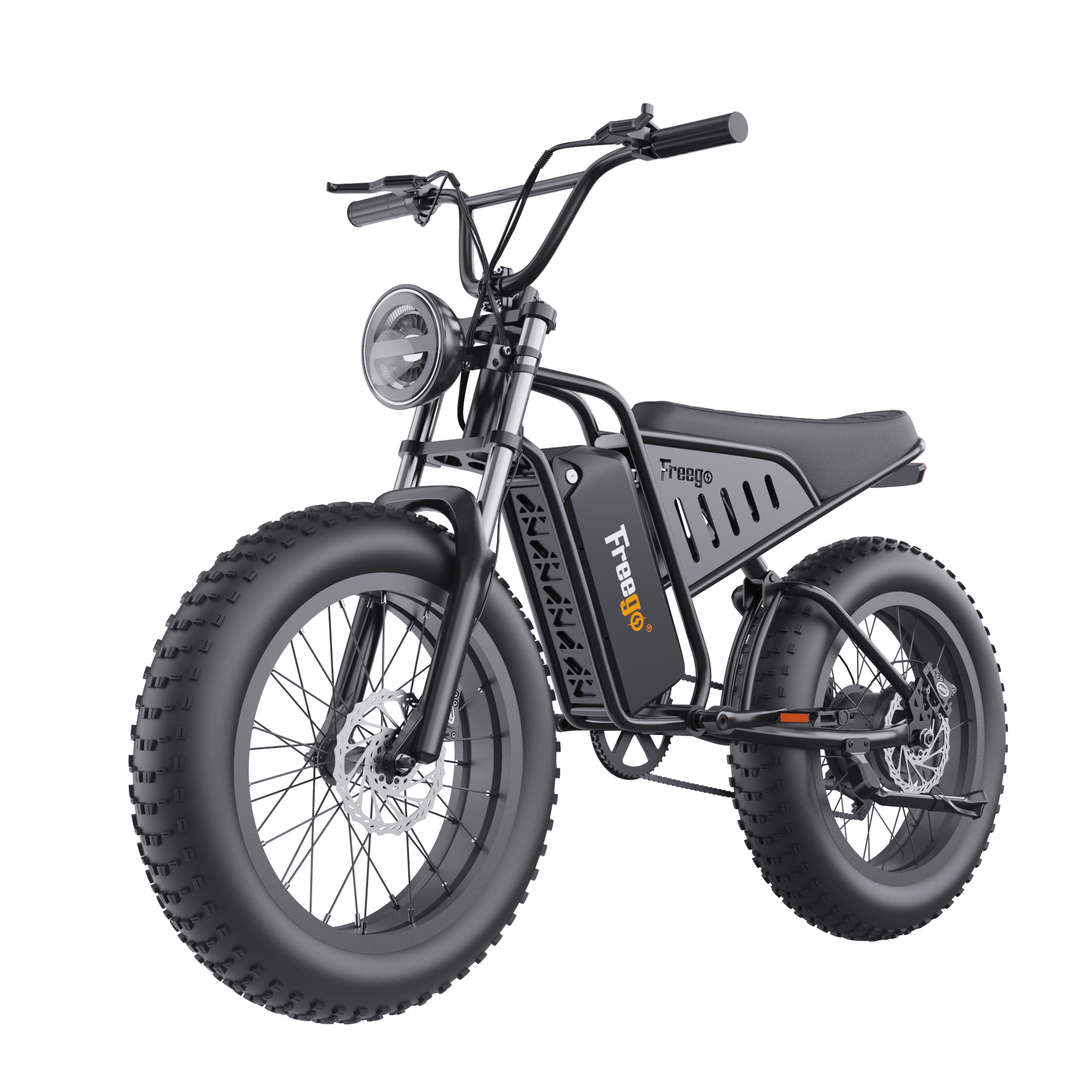
Unmatched Traction and Stability on Challenging Terrain
How Fat Bike Tires Enhance Grip on Uneven and Slippery Surfaces
Fat bike tires really stick to the ground because they have those wide 4.8 inch treads plus special rubber mixtures that work well no matter what kind of terrain comes up. When riders talk about fat bikes, they often mention how much bigger the contact patch is compared to regular e-bike tires. According to some research from Bicycle Tire Dynamics in 2023, there's actually about 230% more surface area touching the ground. That makes all the difference when riding through muddy patches, across slippery roots, or even on frozen trails where normal tires would just spin out. The tire designers also put some thought into preventing mud from building up between the knobs. And interestingly enough, those sidewalls contain silicone which helps them stay flexible even when it gets pretty cold outside.
The Science of Wide Contact Patches and Low Tire Pressure in Maximizing Control
| Parameter | Fat Bike Tires | Standard E-Bike Tires |
|---|---|---|
| Contact Area | 142 in² | 38 in² |
| Recommended Pressure | 5-15 PSI | 25-50 PSI |
| Ground Deformation Depth | 1.2" | 0.4" |
This design allows fat tires to conform to terrain irregularities, distributing load evenly across obstacles. At 8 PSI, a 26×4.8" tire forms a 9.3" x 3.1" footprint, reducing surface pressure by 72% compared to narrow tires under the same load (Traction Physics Journal 2024).
Performance Comparison: Fat Tires vs. Standard E-Bike Tires in Mud, Sand, and Snow
Independent testing shows fat tires reduce wheel slippage by:
- 58% in coastal sand dunes
- 41% on snow-covered singletrack
- 33% in clay-rich mud
The aggressive tread patterns on premium fat tires outperform hybrid e-bike knobs in lateral stability during 25° slope ascents.
Real-World Case Studies: Riders Conquering Loose Terrain With Fat-Tire E-Bikes
A Utah trail consortium recorded 89% fewer dismounts among fat e-bike users versus traditional mountain e-bikes during 2023 spring thaw conditions. In Norway’s Lyngen Alps, guides navigated glacier-adjacent scree fields using 5" tires at 6 PSI, carrying 28% more gear without compromising stability.
Industry Insight: Why Lower Pressure Improves Traction Without Sacrificing Durability
Modern tubeless systems with reinforced sidewalls enable safe operation at ultra-low pressures once considered risky. A 2024 materials study revealed dual-compound tires running at 8 PSI endure 2.3X more impact cycles than rigid 30 PSI setups, as controlled carcass flex reduces peak stress concentrations by 61%.
Superior Shock Absorption for Enhanced Rider Comfort
Cushioning Effect of Fat Tires on Rocky and Root-Filled Trails
The wide tires on fat bikes work kind of like built-in suspension because they run at such low pressures between 5 and 15 PSI with plenty of air inside them. When riders hit those pesky rocks or gnarly roots along the trail, the actual tire wall just bends around whatever gets in the way instead of jolting straight through to the handlebars. Some recent testing found that these big tires cut down on vertical impacts by almost half, roughly 43 percent, when riding over trails packed with roots compared to regular mountain bike setups according to a report from Off Road Cycling Dynamics back in 2023.
Reduced Rider Fatigue During Extended Off-Road E-Bike Adventures
By minimizing repetitive jolts, fat tires help sustain lower physical strain over time. This results in:
- 28% lower average muscle activation in core stabilizers
- 19% reduction in hand/wrist fatigue markers
Riders report being able to ride comfortably for 2.1X longer on technical singletrack when using fat-tire e-bikes (Trail Rider Biomechanics Study 2023).
Measured Data: Vibration Reduction Across Rough Terrain With Fat-Tire Setups
Accelerometer data indicates fat tires absorb 62% of high-frequency vibrations (>15 Hz) linked to rider discomfort. Performance remains consistent across speeds, with only a 12% drop in efficiency at 20 mph compared to 15 mph—making them especially effective for electric-assist riding where sustained speed is common.
Optimal Floatation on Soft Surfaces Like Sand and Snow
How Wider Tires Distribute Weight to Prevent Sinking in Soft Terrain
Fat bike tires help riders stay on top of soft ground because they create a much larger contact area with whatever surface they're riding on. Take a typical 4 inch wide fat tire for example it covers almost three times as much ground as regular mountain bike tires do. The extra width spreads out the rider's weight across this bigger footprint. What does this mean practically? Ground pressure drops down to around 1.5 to 2 pounds per square inch instead of the usual 8 to 10 psi seen with narrower tires. This makes all the difference when riding through snow or sand where normal bikes would just sink straight down into the terrain like falling into postholes.
The Physics of Surface Pressure and Its Impact on Off-Road Floatation
Floatation relies on the principle:
Ground Pressure = Total Weight / Contact Area
Doubling tire width from 2.3" to 4.6" enables electric fat bikes to:
- Reduce ground pressure by 62% on sand (Journal of Terramechanics 2022)
- Maintain forward motion with 40% less pedaling effort in snow
- Achieve stable flotation even below 3 mph, where narrow tires stall
This physics advantage allows fat-tire e-bikes to travel atop surfaces that would otherwise collapse under concentrated loads, opening access to previously unrideable environments.
All-Terrain Versatility for Year-Round Electric Adventure
From Snow-Covered Trails to Coastal Dunes: One Fat-Tire E-Bike for Diverse Environments
Fat bike tires handle pretty much anything nature throws at them, whether it's bone-chilling -20°F trails in the winter or scorching hot desert dunes when temps hit 100°F. The wider profile of these tires (about 4.8 inches) gives them roughly 72% more ground contact compared to regular mountain bike tires. This means riders can tackle all sorts of tricky spots without constantly adjusting their approach – think slippery riverbanks covered in ice, muddy forest paths, or sandy beach areas where normal bikes would struggle. A recent report from 2023 called the E-Bike Adventure Report found something interesting too. People riding e-bikes with fat tires actually get out and explore 39% more different kinds of terrain throughout the year compared to folks stuck with skinny tires on their machines.
Eliminating Multiple E-Bike Setups with a Single Versatile Fat-Tire Solution
For off-road enthusiasts, switching to one versatile fat-tire e-bike can save around $1,200 yearly since there's no longer a need to own multiple bikes for snow, sand, trails, etc. Riders spend about 4 or 5 fewer hours each month on maintenance tasks compared to maintaining several specialized bikes. What's more impressive is that these modern machines still offer nearly all the functionality of owning multiple bikes. The latest models come equipped with adjustable air pressure systems ranging from low 8 psi settings for soft terrain to high 30 psi for harder surfaces. Plus, they feature interchangeable tire treads so riders can quickly adapt their setup depending on what kind of terrain they'll face next, all without swapping out entire tires.
Case Study: Fat-Tire E-Bike Utility in Mountainous Winters and Sandy Coastlines
Over the course of twelve months, riders traveling from Alaska all the way down to California took part in a survey about fat tire e-bikes. What they discovered was pretty surprising actually these bikes managed to go about twice as fast on average compared to regular models when dealing with mixed terrain during their tours. The participants faced quite a challenge too, riding through deep snow in the Sierra Nevadas where the pack was around 36 inches thick, plus tackling steep slopes at the Oregon Dunes National Recreation Area with inclines reaching nearly 28 degrees, all while keeping the same tire setup throughout. When it came to energy efficiency, there wasn't much variation either. Tests revealed only about a 13 percent difference in how much battery power got used up whether conditions were good or really tough. This kind of performance makes them great choices for anyone planning extended trips across different surfaces without constantly worrying about running out of juice.
FAQ
Why are fat bike tires better on rough terrain compared to regular tires?
Fat bike tires offer larger contact patches and lower pressure, enhancing grip and stability on uneven and slippery surfaces.
How do fat tires improve rider comfort?
Fat tires operate at lower pressures, absorbing shocks from rough trails and reducing rider fatigue.
Can fat-tire e-bikes be used in all types of weather conditions?
Yes, fat-tire e-bikes are versatile, performing well in diverse environments such as snow-covered trails, sand dunes, and forest paths.
Do you need multiple bike setups to handle different terrains?
No, fat-tire e-bikes can handle various terrains effectively, eliminating the need for multiple bike setups.
Are fat-tire e-bikes energy-efficient during long rides?
Yes, they maintain consistent energy efficiency across varying terrains and conditions.
Table of Contents
-
Unmatched Traction and Stability on Challenging Terrain
- How Fat Bike Tires Enhance Grip on Uneven and Slippery Surfaces
- The Science of Wide Contact Patches and Low Tire Pressure in Maximizing Control
- Performance Comparison: Fat Tires vs. Standard E-Bike Tires in Mud, Sand, and Snow
- Real-World Case Studies: Riders Conquering Loose Terrain With Fat-Tire E-Bikes
- Industry Insight: Why Lower Pressure Improves Traction Without Sacrificing Durability
- Superior Shock Absorption for Enhanced Rider Comfort
- Optimal Floatation on Soft Surfaces Like Sand and Snow
- All-Terrain Versatility for Year-Round Electric Adventure